
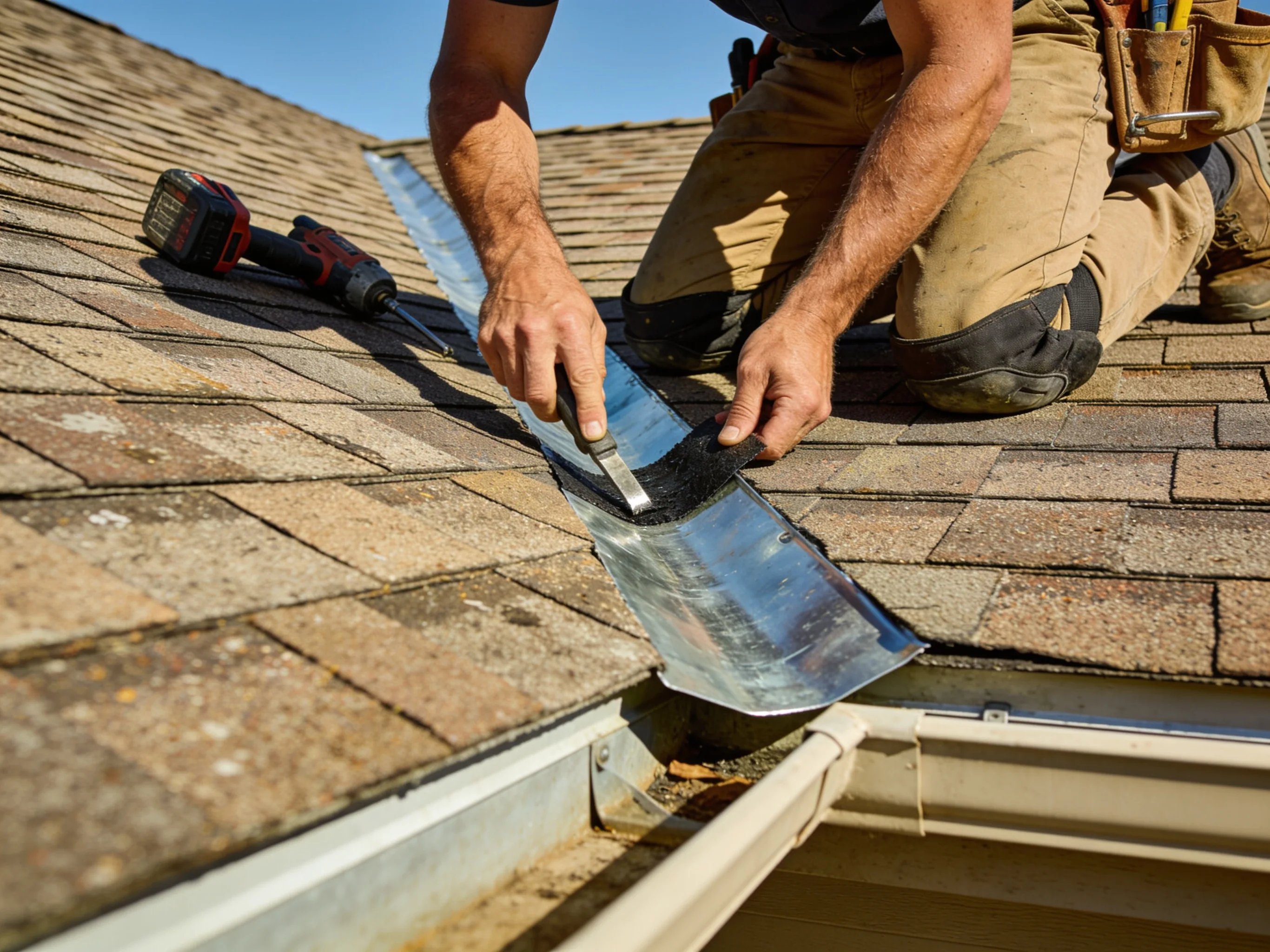
Roof valleys collect runoff from two planes and are the first place leaks appear during the infrequent but intense storms that hit Taylor County. In older neighborhoods like Elmwood and South Abilene, many homes built before 1970 still have original metal valleys that have thinned from decades of expansion and contraction in the extreme summer heat. Proper repair requires removing the overlapping shingles, inspecting the valley metal or membrane for pinholes, and installing new step flashing that extends at least six inches under each course rather than relying on sealant alone.
Low annual rainfall means most Abilene roofs go months without testing, so small valley defects go unnoticed until water reaches the decking and drywall. Homes near Dyess Air Force Base and in Sears Park often have steeper roof pitches that accelerate water speed through valleys, increasing the chance of blow-by under poorly lapped flashing. We always check for rotted sheathing at the valley edges and replace any compromised sections before reinstalling shingles to prevent recurrence during the next heavy rain event.
Homeowners sometimes attempt to fix valley leaks with roof cement or spray foam, but these materials crack within a single summer season in Abilene’s temperature swings. Code-compliant repairs in Taylor County require the new valley material to match the existing roof system and extend fully to the eaves and ridge without seams in the flow path. We also verify that adjacent attic insulation has not become wet, as trapped moisture here leads to mold growth even after the exterior leak is stopped.
Technician insight
In Abilene, the thing that catches most people out with Roof Valley Leak Repair is how the long stretches of dry weather let pine needles and grit collect in valleys on older homes in Elmwood and near the Grace Museum, then a single storm sends water sideways under the flashing because the original metal has already thinned from summer expansion cycles.
Sears Park Valley Leak After Wind-Driven Rain
Water stains appeared on the ceiling of a 1960s ranch in Sears Park after an unusual spring downpour. We found the original galvanized valley had corroded along the nail line and debris had dammed flow. New copper-coated steel valley metal was installed with extended step flashing, damaged decking was replaced, and the ceiling drywall dried without mold.
Roof Valley Leak Repair Services We Offer
✓Valley Flashing Replacement
Remove deteriorated metal valleys and install new corrosion-resistant flashing with proper step flashing integration to prevent water intrusion on Abilene homes.
✓Valley Sealant Restoration
Clean and reapply high-grade elastomeric sealant along valley edges where minor surface cracking has developed from repeated heat cycles.
✓Shingle Valley Repair
Replace damaged or missing shingles along valleys and ensure correct overlap so water is directed into the valley rather than under the roof plane.
✓Emergency Valley Leak Patching
Provide same-day temporary or permanent patches for active valley leaks reported in Buck Creek or Northwest Abilene before full repair can be scheduled.
✓Valley Underlayment Upgrade
Install additional ice-and-water shield or synthetic underlayment beneath valleys on homes near Abilene State Park where sudden runoff occurs.
Roof Valley Leak Repair Cost in Abilene, TX
| Service | Typical Range | What Affects It |
|---|---|---|
| Valley inspection and diagnosis | $125–$225 | Includes attic access and written findings; credited toward repair if work proceeds. |
| Single valley flashing replacement | $650–$1,200 | Price varies with roof height, shingle type, and whether decking repair is required. |
| Valley sealant restoration | $275–$450 | Suitable only for minor surface issues; not recommended for split metal. |
| Emergency temporary patch | $300–$500 | Stabilizes active leaks until permanent repair; common for Sears Park and South Abilene calls. |
Ranges are typical for Abilene, TX and confirmed with an exact written quote before any work starts.
How it works
- 1
On-Site Valley Inspection
We examine both sides of the valley from the attic and roof surface, checking for daylight, staining, and fastener corrosion common in Taylor County homes.
- 2
Material Assessment
Determine whether the existing valley is metal, membrane, or open, then select compatible replacement materials that withstand Abilene’s summer heat.
- 3
Leak Source Isolation
Trace water paths to confirm the valley is the sole entry point rather than adjacent ridge or sidewall issues.
- 4
Targeted Repair Execution
Remove affected shingles, replace or seal the valley, reinstall shingles with correct nailing, and verify drainage.
Pricing
Upfront quotes after inspection; final price depends on valley length, roof pitch, and extent of decking damage.